
Diploma in Culinary Arts and Technology Management (DCATM)
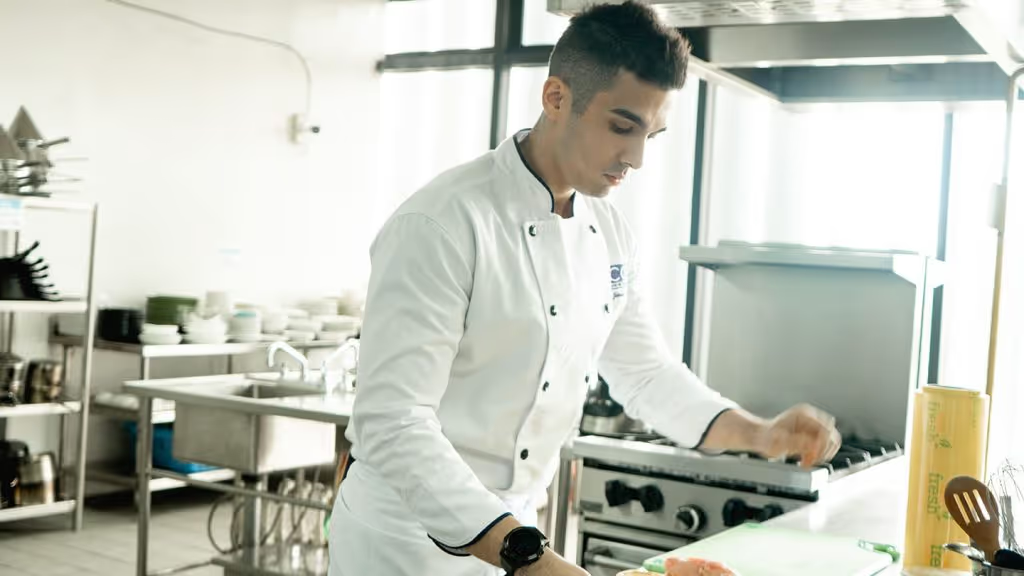
CCA’s flagship course provides you with a solid foundation to become a culinary chef.
Practical kitchen training is complemented with a comprehensive food service management training program which aims to develop your entrepreneurial and management competencies in handling an institutional or commercial kitchen.
Program Overview
The Diploma in Culinary Arts & Technology Management (DCATM) is CCA Manila’s flagship program, offering comprehensive training in both culinary arts and business management. This two-year, on-campus program combines hands-on cooking experience with essential business skills to prepare students for successful careers in the food industry.
What You'll Learn
- Professional kitchen fundamentals and advanced culinary techniques
- Knife skills and food safety protocols
- Sustainable cooking practices and green chefmanship
- Restaurant operations and food service management
- Regional Filipino and international cuisines
Hands-On Experience
Students gain real-world experience through:
- Student-led dining events
- Catering functions
- Culinary tours
- Industry events
Career Opportunities
Graduates are prepared for diverse roles including:
- Line cook or chef de partie
- Restaurant owner or food entrepreneur
- Corporate chef
- Executive chef
Program Goals
- Develop excellence in culinary techniques and kitchen fundamentals that meet modern industry standards
- Build strong management and entrepreneurial skills for successful culinary ventures
- Master both Filipino and international cuisines while staying current with industry trends
- Cultivate leadership abilities and sustainable practices for long-term success
Program Objectives
Students will:
- Master essential culinary techniques through practical training and assessments
- Develop business acumen through hands-on management of kitchen operations and budgets
- Build strong communication and problem-solving skills through collaborative projects
- Apply ethical standards and sustainable practices in professional settings
- Establish habits for continuous professional growth and development
Culinary Path
Graduates of this program may initially serve as line cooks or chef de partie in distinguished establishments. eventually, career paths would lead to being a restaurateur, food entrepreneur, corporate chef, executive chef, R&D chef to name a few. This program is ideal for aspiring chefs, career changers, food enthusiasts, and entrepreneurs seeking a strong foundation in the culinary industry.
Accreditation & Credibility
Course Curriculum
| Level | Course Code | Course Title | Course Description | Prerequisite | Units | Course Credit & Clock Hours |
|---|---|---|---|---|---|---|
| 1 | FC101 | ProMgt Professional Chef (Pro Chef) | An introductory course that describes the food service organization, the development of cooking as a profession and the role / functions of the chef with emphasis on knowledge, skills and attitude required for effective performance. | 2 | 24 | |
| FC102 | ProMgt Food Safety and Sanitation (FSS) | An introduction to food borne illness and their origins and the basic safety procedures pertinent to the food service industry. The applications of the environmental management for restaurant operations (EMRO) will also be discussed. NOTE: The National Restaurant Association (NRA) Servsafe Certification Exam is given to all students taking the course. | 2 | 32 | ||
| SC960 | Green Chefmanship | This course is an introduction on how to be more conscious of our environment, and how to give back to Mother Earth in our daily lives; and through our profession, especially in the Kitchens. This will be a trademark of a CCA Alumni. | 3 | 48 | ||
| FC106 | Product Identification (Product ID) | The application of principles, theories and techniques in the handling and preparation of fresh produce, herbs and spices, seasonings and flavorings, oils and nuts, cereals and starches, milk and dairy products, sugar, chocolates and eggs. | 2 | 32 | ||
| FC103 | ProMgt Quantity Food Production (Culinary Math) | The application of management principles to planning and production in foodservice operations. | FC101 | 2 | 32 | |
| CC100.1 | Skills 1: Mise en Place and Knife Skills (1 wk) | An intensive course on mis en place and knife skills stressing both theoretical & practical kitchen application. Implementation of the principles of planning, techniques, presentation and service would be enhanced through daily kitchen production, and grand buffet. / An intensive course on meat / fish fabrication stressing both theoretical & practical kitchen application. Implementation of the principle of planning, techniques, presentation through daily kitchen production and the grand buffet. | FSS; COREQ: Skills 2 | 3 | 72 | |
| CC100.2 | Skills 2: Meat and Fish Fabrication (3 wks) | |||||
| 13 | 240 | |||||
| Level | Course Code | Course Title | Course Description | Prerequisite | Units | Course Credit & Clock Hours |
|---|---|---|---|---|---|---|
| 2 | CC201 | Stocks, Soups and Sauces (SSS) | Theoretical and practical application in the preparation of various stocks, soups and mother sauces. | Skills 1 & 2; COREQ: SVC | 3 | 80 |
| CC202 | Starch and Vegetable Cookery (SVC) | The preparation and enhancement of starches and vegetables in terms of flavor, texture and color. In essence, students will be taught to prepare and serve starches and vegetables that are not just acceptable but are sought after. | Skills 1 & 2; COREQ: SSS | 3 | 64 | |
| CC205 | Cooking Methods | Application of principles, procedures and techniques in the execution of different cooking methods, both moist and dry. | SSS; SVC | 3 | 80 | |
| FC209 | Restaurant Service Operations | An introductory course on the different types of food and beverage service required in a full operational restaurant. Topics on the role and functions of the different service staff, napkin folding service, taking order and delivery of food are also included. | FSS | 2 | 48 | |
| 11 | 272 | |||||
| Level | Course Code | Course Title | Course Description | Prerequisite | Units | Course Credit & Clock Hours |
|---|---|---|---|---|---|---|
| 3 | Bread Baking | Bread Baking | Application of basic principles in planning, techniques, presentation and service in baking and bread making. | FSS; QFP | 4 | 96 |
| FC105.1 | Business Communication 1.1 (BC 1.1) | Application of the principles of written and oral communication skills in effective business communication. | 2 | 24 | ||
| FC105.2 | Business Communication 1.2 (BC 1.2) | Application of the principles of oral communication in effective business communication. | BC1.1 | 2 | 24 | |
| CC502 | Patisserie | Application of principles of planning, techniques, presentation and service in the preparation of cakes, pastries, pies and tarts, cookies and specialty desserts. | FSS; QFP | 4 | 96 | |
| CC304 | Food Presentation and Garnish | Application of principles and techniques in food presentation. Students will learn the rationale behind presenting food properly, achieving balance in food color, shape, texture and temperature. | Cooking Methods | 2 | 32 | |
| FC104 | Basic Principles of Cooking and Nutrition (BPCN) | An introductory course on the science of cooking and the application of nutrition to foodservice operations. | FSS | 2 | 48 | |
| 16 | 320 | |||||
| Level | Course Code | Course Title | Course Description | Prerequisite | Units | Course Credit & Clock Hours |
|---|---|---|---|---|---|---|
| 4 | CC302 | Garde Manger | Application of planning principles, techniques, presentation and service in the preparation of salads, dressings, cold appetizers, patés and terrines and other garde manger items. | Food Presentation and Garnish | 4 | 96 |
| FC409 | Wine and Beverage | The preparation and service of non-alcoholic and alcoholic beverages. | FSS | 2 | 72 | |
| CC402 | Breakfast, Lunch and Dinner Operations | The application of basic knowledge on planning, cooking methods, presentation and service of mealtime offerings in a professional kitchen environment. | Garde Manger | 4 | 96 | |
| 9 | 264 | |||||
| Level | Course Code | Course Title | Course Description | Prerequisite | Units | Course Credit & Clock Hours |
|---|---|---|---|---|---|---|
| 5 | CC599 | Practicum | Supervised work experience in specific in-house kitchen stations. | BLO | 4 | 200 |
| 4 | 200 | |||||
| Level | Course Code | Course Title | Course Description | Prerequisite | Units | Course Credit & Clock Hours |
|---|---|---|---|---|---|---|
| 6 | CC801 | French Cuisine | The development and characteristics of classical French cuisine in the context of international culinary culture, specifically regions of Provence, Bordeaux, Brittany-Normandy, Alsace. | Practicum | 4 | 96 |
| FC301 | French Language 1 | The use of French articles, nouns, pronouns, adjectives, adverbs, prepositions, the present and imperative conjugation of verbs to form basic sentences for conversation. | 4 | 64 | ||
| CC702 | European Cuisine | The development and characteristics of classical European cuisine in the context of international culinary culture, specifically Greece, England, Italy and Spain. | French Cuisine | 4 | 96 | |
| FC100 | Laws, Values and Ethics in Culinary Management | Basic concepts of government promotion and regulation of business in the culinary industry; includes values and ethics for a culinary professional. | 3 | 48 | ||
| FC602.1 | National Service Training 1.1 | A situation-based approach to community service. | 2nd year | -2 | 24 | |
| 14 | 328 | |||||
| Level | Course Code | Course Title | Course Description | Prerequisite | Units | Course Credit & Clock Hours |
|---|---|---|---|---|---|---|
| 7 | CC701 | American Cuisine | The development and characteristics of classical American cuisine in the context of international culinary culture, specifically New England, Mid-Atlantic, Heartland, South East, Gulf, Pacific/New York cuisine. | European Cuisine | 4 | 96 |
| FC602.2 | National Service Training 1.2 | A situation-based approach to community service. | NSTP 1.1 | 4 | 64 | |
| CC601 | Asian Cuisine | An introduction to Asian cuisine directed towards the development and understanding of culinary peculiarities of cultural disciplines and preferences of selected cuisine, focusing on China, Japan, Thailand and India. | Practicum | 4 | 96 | |
| FC702.1 | National Service Training 2.1 | A situation-based approach to community service. | NSTP 1.2 | 3 | 48 | |
| 7 | 240 | |||||
| Level | Course Code | Course Title | Course Description | Prerequisite | Units | Course Credit & Clock Hours |
|---|---|---|---|---|---|---|
| 8 | CC602 | Filipino Cuisine | An introduction to Filipino cuisine directed towards the development and understanding of culinary peculiarities of cultural disciplines and preferences of selected regions specifically Ilocos, Tarlac and Pampanga, Bicol, Visayas, Mindanao. | Asian Cuisine | 4 | 96 |
| FC702.2 | National Service Training 2.2 | A situation-based approach to community service. | NSTP 2.1 | -2 | 24 | |
| CC802 | Catering and Banqueting | Planning, organizing, supervising and preparing for special functions. (Note: 16 hours lecture on menu planning, making a contract, crisis management etc., 16 hours of service component and 80 hours for laboratory.) | All Culinary Courses | 5 | 112 | |
| 8 | 232 | |||||
| Level | Course Code | Course Title | Course Description | Prerequisite | Units | Course Credit & Clock Hours |
|---|---|---|---|---|---|---|
| 9 | CC999 | Competency Exam | A two-part comprehensive exam: written and skills test. The written exam will cover topics taken during the first nine levels. An individual presentation of a 3-course menu meal (appetizer, main course and dessert) to a panel of evaluators. | Levels 1–8 | 2 | 0 |
| MC306 | Pro. Mgt. Material Resource Management | Principles and procedures in planning, acquisition, storage and utilization of food and non-food material resource in food service operations. The recruitment, development, motivation and maintenance of a competent work force. | CC999 | 3 | 48 | |
| MC307 | Pro. Mgt. Human Resource Management | The recruitment, development, motivation and maintenance of a competent work force for an institutional food service operation. | CC999 | 3 | 48 | |
| MC408 | Pro. Mgt. Sales, Marketing and Promotion | Principles of sales, marketing and promotions as applied to the food service industry. | CC999 | 3 | 48 | |
| MC410 | Pro. Mgt. Cost Control | Principles of Food, Beverage and Labor Cost Control for Food Service Operations. | CC999 | 3 | 48 | |
| 14 | 192 | |||||
| Level | Course Code | Course Title | Course Description | Prerequisite | Units | Course Credit & Clock Hours |
|---|---|---|---|---|---|---|
| 10 | CC1000 | Apprenticeship | Supervised work experience in specific kitchen stations of an institutional/commercial food service operation. | Levels 1–9 | 12 | 600 |
| 12 | 600 | |||||
Outcome Measures & Benchmarks
Agency: American Culinary Federation (ACF) · 3-year average (2022 – 2024)
90% of enrolled students graduate from the Diploma in Culinary Arts and Technology Management program, reflecting strong student commitment and institutional support throughout the curriculum.
-
Pre-Boarding / Application Requirements
- Kitchen Discovery Course (KDC)
- Written Examination (Applicable only to SHS Applicants)
-
Tuition and Student Fees
Students may choose from three tuition fee payment options based on their preference:
- Full Program (2 years)
- Annual Payment (1 year)
- Per Level (5 levels per year)
A detailed tuition fee schedule is provided during the Program Briefing.
What's Included in the Tuition Fees?
The tuition fees cover the following:
- Lecture and Laboratory Fees – Inclusive of ingredients and supplies
- Miscellaneous Fees, which include:
- Access to the Rouxbe e-learning platform
- E-books
- Knife kit
- Student services
- Medical and IT support
Additional Expenses (Not Included in Tuition Fees)
These items are charged separately and must be arranged accordingly:
- Uniforms – Purchased directly from an accredited supplier
- Alternative Learning Programs (Exposure Trips) – Conducted once per level; costs vary based on student body decisions and chosen activities
- Graduation Fees
- Other Fees – Such as requests for Transcript of Records (TOR) and photocopies of student records
-
Enrollment Requirements
Senior High School Applicants
- Official Transcript of Records / Form 137
- Copy of Grades (Senior High School) / Form 138
- Copy of High School Diploma
- Good Moral Character (Guidance Counselor)
- Letters of Recommendation (Head of School, School Registrar, and Homeroom Adviser)
- PSA Copy of Birth Certificate
- Photo 1×1 (3 pcs); 2×2 (3 pcs) – white background
- Medical Exam
- Completed CCA online application form
College Undergraduate (Transferee)
- Official Transcript of Records
- Honorable Dismissal / Certificate of Transfer
- Good Moral Character (Guidance Counselor)
- Letters of Recommendation (Head of School and School Registrar)
- PSA Copy of Birth Certificate
- Photo 1×1 (3 pcs); 2×2 (3 pcs) – white background
- Medical Exam
- Completed CCA online application form
College Graduate
- Official Transcript of Records
- Copy of College Diploma
- Good Moral Character (Guidance Counselor)
- Letters of Recommendation (Head of School and Registrar)
- PSA Copy of Birth Certificate
- Photo 1×1 (3 pcs); 2×2 (3 pcs) – white background
- Medical Exam
- Completed CCA online application form
“This program is about building the chefs of the future from highlighting strong foundational knowledge, green chefmanship and taking pride in their own cuisine. We arm our students with confidence, knowledge and humility to battle the prosperous field of culinary arts. It is our commitment as a team to fulfill as many culinary dreams as we can.”

Chef Philip John Golding
Success Stories
“A lot of my core values and knowledge as a chef and most especially, my love for food, comes from my two years of studying at CCA, Manila. I learned how to persevere in my chosen career and to never give up when faced with tough challenges. Since learning is a never-ending process, there's always something new to discover so I should never stop researching, honing my craft and innovating in the kitchen.”
.jpg)
“I researched for schools until I came across CCA Manila. And, I saw a couple of chefs that graduated from there. So I figured that they must have a good curriculum. That is why I decided to go down that path. It was one of the best decisions I have ever made. It gave you the basics. It gave you the confidence that you would go into any kitchen and if someone asked you to do this, you would immediately recognize what it is because of the teachings that were done in school.”
.png)
“My family sent me to Manila to study culinary. What my CCA family taught me was to conquer the world with my cuisine.”
.png)
